What Down Syndrome Reveals About Human Worth
“Your baby is going to have Down syndrome. In cases like this, we recommend termination.”
In the span of a single breath, Shauna Amick received both a life-altering diagnosis and the option to walk away from it.
Just moments earlier, she had been lying on an ultrasound table, wondering whether she would soon be decorating her nursery in shades of blue or pink. But as the technician spent more than forty-five minutes examining her baby’s heart, the excitement Shauna carried into the appointment began to give way to unease.
“When are you going to tell me?” she finally asked.
That’s when the technician informed Shauna that her baby girl had a serious heart defect and showed markers associated with Down syndrome.
As Shauna heard news that would forever alter her future, she also received another message: she could choose to reject it.
Before she was offered compassion or support, Shauna was offered a way out.
She was offered a way out of a future she’d never imagined for her child—a future that seemed frightening, overwhelming, and unknown. She was offered a future without her daughter.
At that moment, Shauna chose life.
While Shauna’s experience is common among parents who receive a prenatal diagnosis of Down syndrome, her life-saving decision is not. According to a 2022 report by the U.S. Congress Joint Economic Committee, an estimated 60-90% of babies diagnosed with Down syndrome are aborted in the United States, while rates in some European countries climb even higher. In Iceland, termination following a prenatal diagnosis of Down syndrome has become so widespread that only two to three babies with Down syndrome are born each year.
Children with Down syndrome experience some of the highest rates of selective abortion following prenatal diagnoses. These statistics raise a troubling question: Why does this diagnosis lead so many parents to conclude that their child would be better off not being born?
The question is not theoretical. In recent months, a high-profile couple with a large social media following publicly announced that they had aborted their baby following a prenatal Down syndrome diagnosis. After initially sharing their excitement about the pregnancy, they were surprised by the backlash that followed the announcement.
The controversy has revealed a deeper cultural tension. Some viewed the couple’s decision as a private medical choice, while others saw it as negating the value of people with Down syndrome.
That debate ultimately points back to the same question: What makes human life valuable?
Today, we often determine a person’s value by what that person does. Productivity, efficiency, independence, intelligence, and social success all become measures of human flourishing. When viewed through that lens, disability can appear to be a deficit to overcome rather than being fully human.
When parents are given a prenatal diagnosis of Down syndrome, they are often presented with the picture of a life of dependence, struggle, and hardship. Not the picture of a life of joy, laughter, and transformation. Parents are told their child will be a burden long before they are ever told that he or she will be a blessing. As a result, parents fear medical complications and costs, lifelong caregiving, intellectual and physical limitations, and the social stigma that can accompany visible disabilities.
When disability is misunderstood primarily as a problem, then we will try to come up with solutions—and those solutions are becoming increasingly aggressive. First came selective abortion following prenatal screening. Now, researchers are exploring ways to eliminate the genetic condition itself.
In the last several years, gene-editing technology has helped researchers identify ways to efficiently delete and “silence” trisomy 21, the chromosome responsible for causing Down syndrome. While this practice has been successfully performed on cultured cells in a lab setting and not on humans, the possibility of involving human life is implied.
These developments reveal unsettling suppositions in the medical community. Should our primary concern be to care for people with Down syndrome… or should our focus be on preventing their existence?
Herein lies a better question: What makes human life valuable?
If value is determined by intelligence, productivity, or genetic makeup, then the effort to eliminate disability may be considered. But if human worth is rooted in something more fundamental, then the conversation changes entirely.
Christianity offers a radically different understanding of disability.
The value of human life is not determined by independence, productivity, IQ, or genetics. Instead, it is grounded in something more fundamental: every human being bears the image of God.
Our value and dignity are inextricably woven into our identity as image-bearers. This is not something we achieve, earn, or accomplish. It’s not something that people have in “degrees” of intelligence or physical strength.
The image of God is not tied to ability. It is a reality woven into every human life. No person, then, is less than another, for we are all equally created in God’s image.
Disability is also not an indication that a person is less loved by God. In John 9, Jesus rejected the assumption that disability was evidence of personal sin or divine displeasure. The man’s blindness was not proof that God loved him less; it was an opportunity for God’s work to be displayed.
In John 9:1-3 it says that as Jesus “went along, he saw a man blind from birth. His disciples asked him, ‘Rabbi, who sinned, this man or his parents, that he was born blind?’
‘Neither this man nor his parents sinned,’ said Jesus, ‘but this happened so that the works of God might be displayed in him.’”
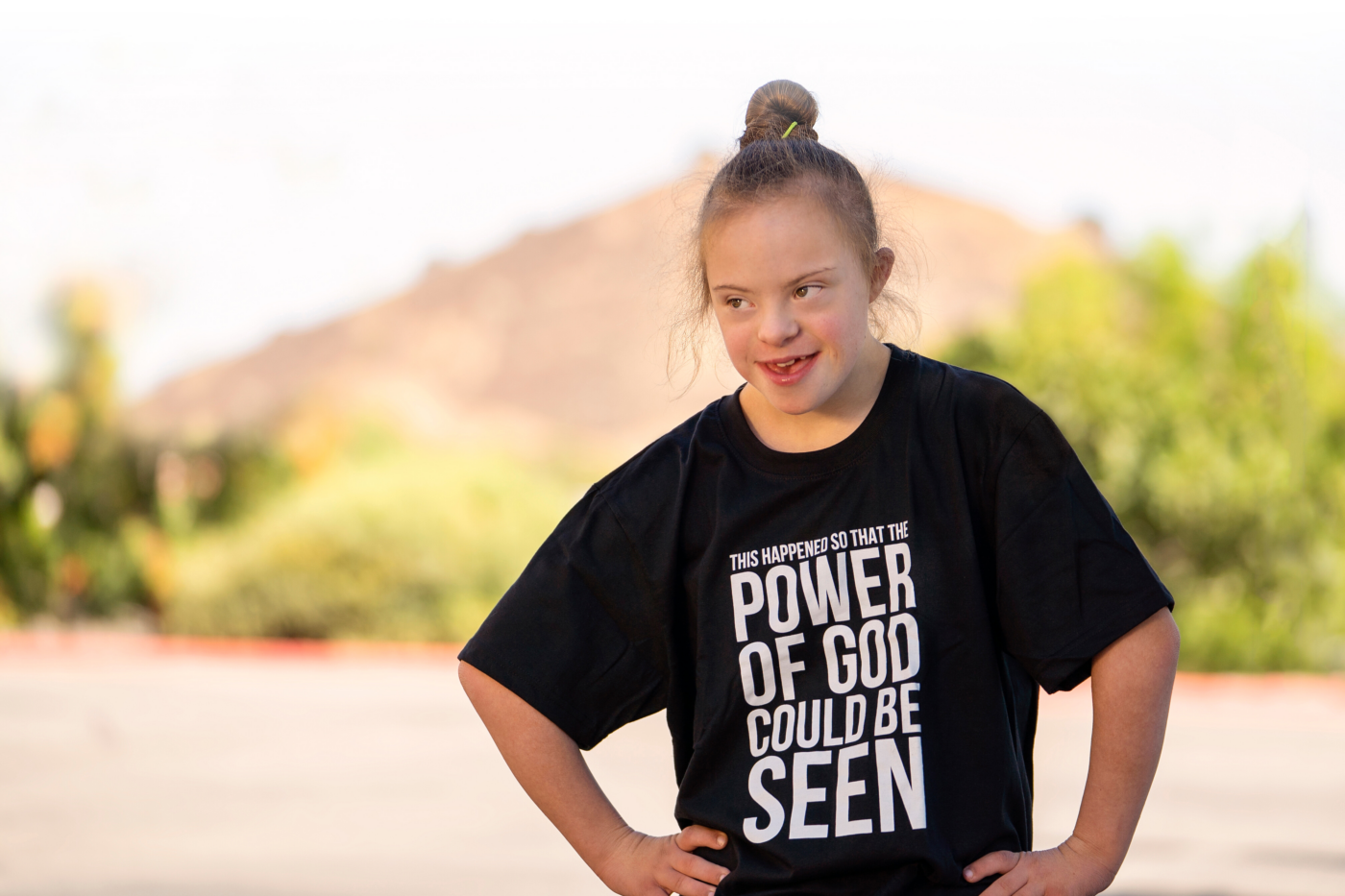
Jesus Himself offered a different way to approach people living with disability. Throughout the Gospels, He consistently moved towards the blind, the leprous, and the chronically ill. Where society pushed people with disabilities into the margins, Jesus spoke to them, embraced them, and welcomed them into community.
Most importantly, He recognized their humanity before addressing their disability.
In following Christ’s example, the church should be moving toward people with disabilities, recognizing the value and dignity of their lives before offering sympathy or solutions.
Christianity challenges the idea that independence determines value or status. Every person depends on others in different ways. People of all ages, abilities, and backgrounds rely on families, communities, and ultimately, God.
Dependence doesn’t reduce a person’s value but reveals that our humanity is grounded in who we are, not what we do.
People with disabilities offer unique gifts to the communities around them. In a culture obsessed with achievement, efficiency, and self-sufficiency, many families and caregivers describe learning lessons of patience, humility, perseverance, and unconditional love through their relationships with people with disabilities. These lessons remind us that human flourishing cannot be reduced to productivity, intelligence, or accomplishment alone.
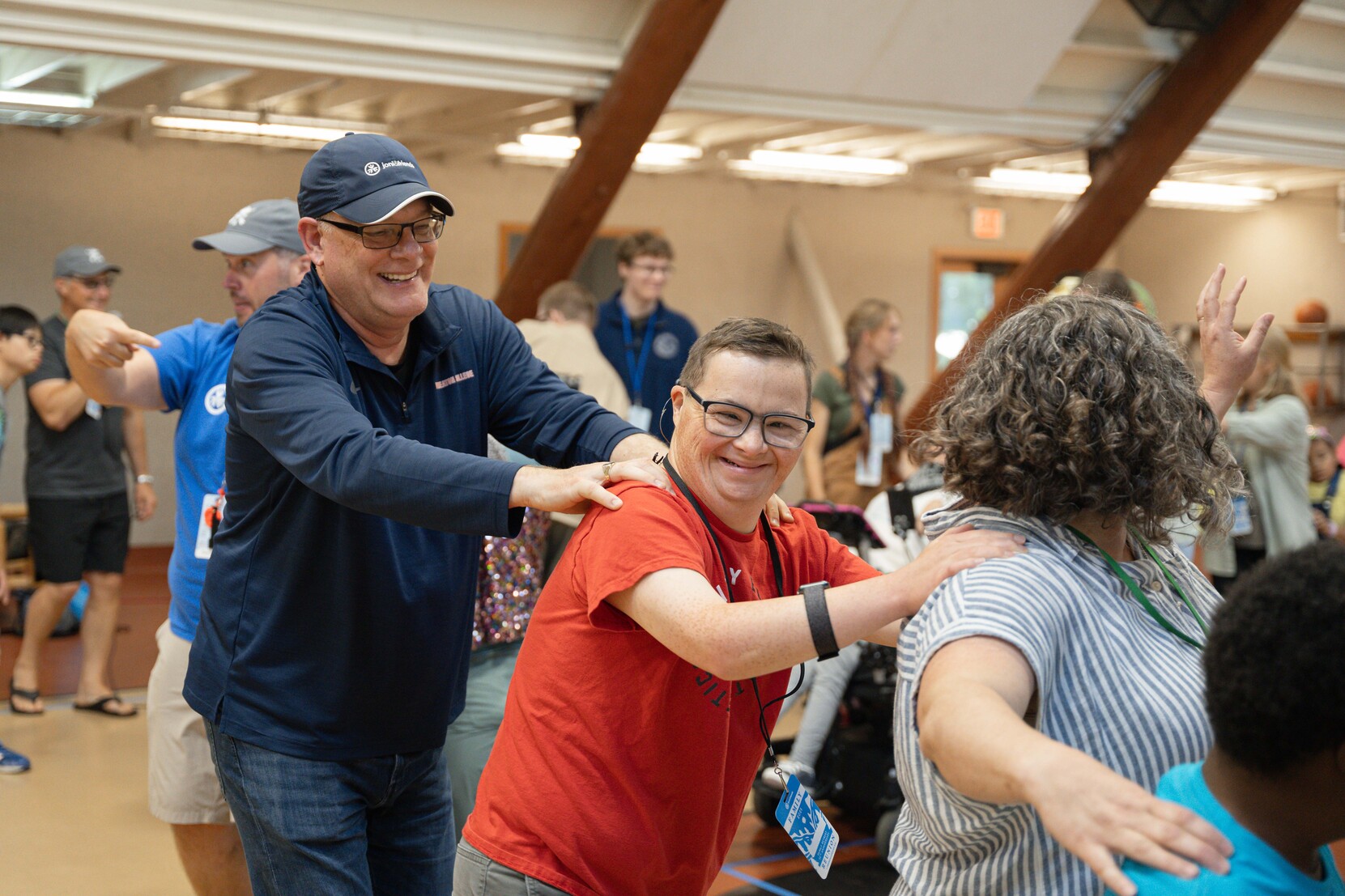
While disability does not define a person’s value, it can influence their experiences. For while ability level is not the source of one’s dignity, it can be a meaningful part of one’s identity.
It would be wrong to argue that disability doesn’t matter, because it profoundly shapes the experiences of people with Down syndrome and other disabilities. At the same time, it would be just as wrong to conclude that disability determines a person’s worth.
But what about the suffering endured by disabled individuals and their families? Some argue that it is better to end a life of suffering than let it exist in the first place. People with disabilities have a different perspective.
Christianity does not deny the reality of suffering. Instead, it acknowledges it honestly. People with Down syndrome and their families face real challenges, just like every other person on the planet. The possibility of suffering should never be a measure of life’s value.
“When people talk about ‘quality of life,’ it’s a reflection of their outside assessment of how a person’s life meaning is impacted by a disease or disability,” says Joni Eareckson Tada, a disability advocate who has lived with quadriplegia for nearly 60 years. “They let the person’s quality of life determine the value of their life, but they do it as someone who has not lived any life other than their own. How can they determine the quality of a life they have not lived?”
“The value of a person’s life is inherent,” she continues. “All lives are sacred to God, end of story. Life is the most fundamental and irreplaceable condition of the human experience, and it should be safeguarded at all costs.”
The suffering associated with disability—medical complications, financial strain, uncertainty, and grief—is real. But suffering is not unique to disability, nor is it a measure of whether a life is worth living. Every person will face hardship in this life, and every life possesses value despite suffering.
Too often, conversations around Down syndrome focus only on the challenges while overlooking the joys of a life with disability. And while some suffering results from the condition itself, much of it comes from environments that refuse to acknowledge or accommodate those who are different.
Perhaps the better question is not how can we eliminate lives that may involve suffering or disability, but how can we better care for the people who experience it.
When Shauna Amick sat in the ultrasound room, trying to understand the diagnosis her daughter had been given, she called to mind the words of Psalm 139:13-14: “For you created my inmost being; you knit me together in my mother’s womb. I praise you because I am fearfully and wonderfully made; your works are wonderful, I know that full well.”
Now, two decades after choosing to cherish and care for her child with Down syndrome, Shauna gives thanks daily for her daughter’s condition.

“At the end of the day, it doesn’t matter how many chromosomes you have, what your IQ score is, or whether all your limbs are functioning,” says Shauna. “Every one of us is made in the image of God—worthy of respect and worthy of life.”
This was written by Cara Ramer, a Joni and Friends intern and student at Cedarville University.
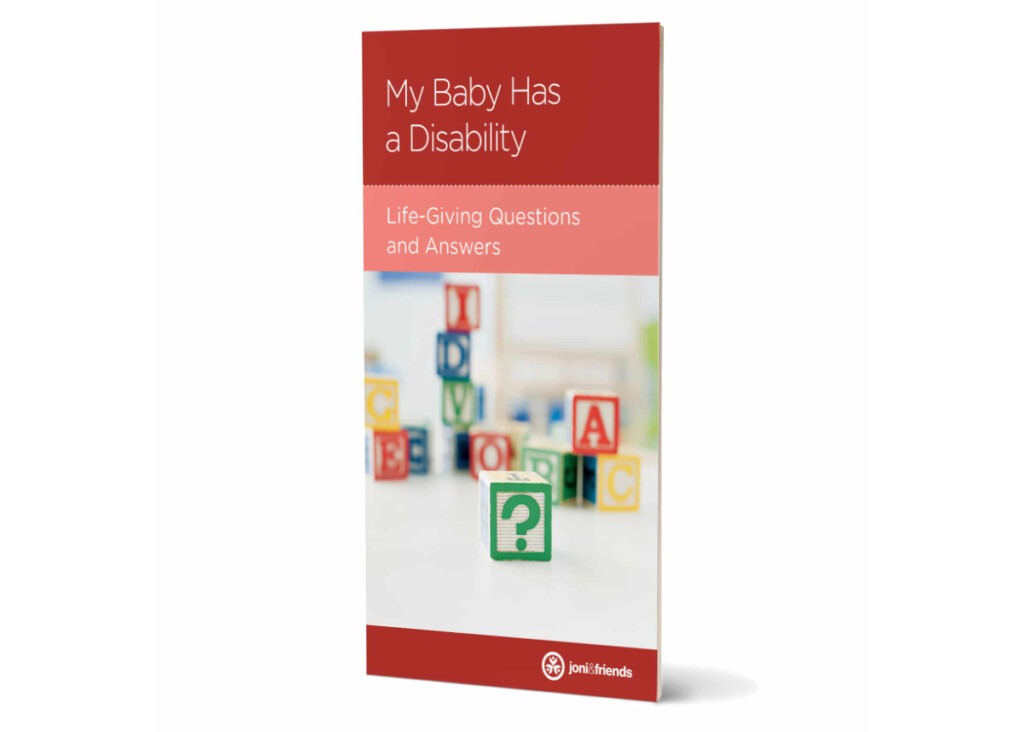
My Baby Has a Disability
When Shauna Amick learned that her baby would be born with Down syndrome she faced questions, fears, and pressure that few can imagine. In her mini book, My Baby Has a Disability, Shauna recounts her story and provides comfort to mothers in a similar situation.