
Five Ways to Empower People with Disabilities in Your Church
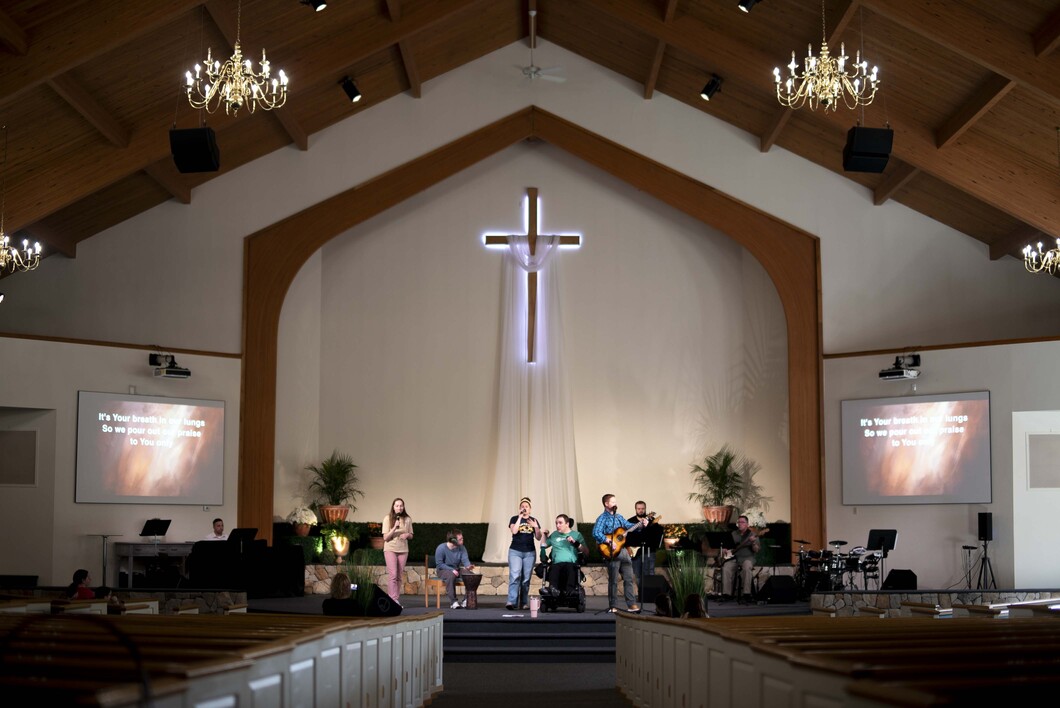
“Disability ministry is not disability ministry until the disabled are ministering.”
In this well-known quote, Joni Eareckson Tada highlights an essential aspect of a healthy, Christ-centered disability ministry: ample opportunities for people with disabilities to contribute and serve.
So, how can your church and community intentionally empower people with disabilities to become meaningful contributors to ministry, serving your congregation and community through their spiritual gifts? Our Joni and Friends® Beyond Suffering course is here to help.

In the excerpt from Beyond Suffering below, you will see why intentionality is key to empowering people with disabilities in your community and discover five practical ways to get started.
Evoking Gifts Requires Intentionality
Unfortunately, even when disabled Christians are present and befriended within a congregation, many churches by default withhold, or don’t think to provide, opportunities for their ministry service. This often occurs because many church leaders assume people with disabilities are unable to serve or do not wish to.
In Copious Hosting, Jennie Weiss-Block describes this foreclosure as denying people with disabilities the dignity of risk. It denies them the dignity to consider the level and character of their participation, and it denies them the dignified risk of exploring their spiritual gifts through experimentation.
In contrast, when people with disabilities serve freely, they display spiritual gifts that evoke thankfulness and even surprise in the broader congregation. Such moments reveal that if church members are attentive to one another, unexpected gifts can be recognized and celebrated, broadening the church’s imagination of what fruitful ministry participation looks like.
Five Ways to Empower People with Disabilities in Your Church
- Provide intentional and repeated training and encouragement:
Disabled Christians may require slower-paced and repeated training for a particular ministry role or task. If a Christian with a speech impediment is to give a sermon, leaders may review and practice the sermon with the person a few times before delivery.
Christians with intellectual disabilities may benefit from receiving volunteer instruction weekly until they master a task; they may also benefit from frequent check-ins to assess any challenges or adjustments. These adjustments may annoy many leaders who value efficiency and self-sufficiency. However, these annoyances are not of Christ.
While efficiency may be a value of the secular world, in the kingdom of God it must be balanced by the values of patience, peace, and humility.

- Be prepared to provide additional support that other leaders may not need:
Disabled leaders may require additional support that other leaders do not require. These supports are imperative to remove barriers that keep them from consistent and effective participation.
Supports can be as simple as providing additional time for a task to be completed or providing an administrative support person to assist in ministry leadership. This often seems the biggest hurdle for churches, since it unravels the myth of the self-sufficient leader.
By being prepared to offer additional support, churches recognize that all Christians are interdependent, leaning on one another for lives of faith and service.

- Be flexible, patient, and experimental on the form of service:
The form of ministry service undertaken by disabled leaders may look different when compared to the ministries of others, and initial attempts at participation may seem to fail. These initial and seemingly disappointing results arise for different reasons.
The form of service may need adaptation; the disabled Christian may require further training and time for practice (additional opportunities to foster their spiritual gifts in service); or the expectations for ministry service may need to be adapted. For instance, if someone speaks slowly or with a stutter, this does not necessarily detract from the power and wisdom of their teaching. By being flexible, patient, and open to experimentation, churches benefit from the ways that disabled Christians may serve within the congregation.

- Celebrate risk over performance:
Sometimes a form of service will not match the spiritual gifts of the disabled Christian. After all, this is true for all Christians! In such instances, everyone can celebrate the bravery and commitment it takes to experiment and learn. Discernment of spiritual gifts entails trial and error.
Encouragement, celebration, and prayer will provide tremendous support as disabled members of the church community continue to step out, believing that God has equipped them for Spirit-filled service.

- Perform a survey of your community in forming an outreach plan:
What are the opportunities for outreach and evangelism in your community? How can you make connections that open space to form relationships with people with disabilities outside the church?
If you are teaching about Luke 15 and Jesus’s love for the lost, what are some activities and questions you could craft to lead a discussion among Christians with intellectual disabilities?
“You are the body of Christ. Each one of you is a part of it.”
1 Corinthians 12:27

Learn more about Beyond Suffering: A Christian View on Disability Ministry
Developed by the Christian Institute on Disability, the second edition of Beyond Suffering: A Christian View on Disability Ministry provides a theological and practical foundation for Christians to minister to and come alongside people living with disability.